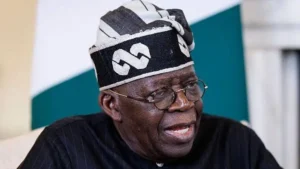
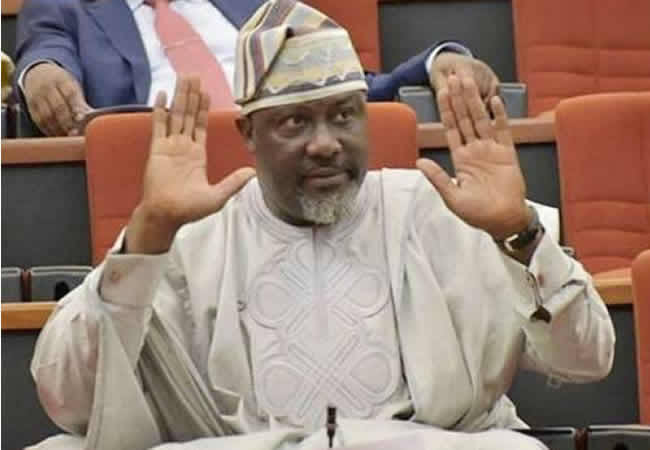
Senator Dino Melaye
By George Ogunjimi, Esq.
There is a difference between being an opposition politician and becoming a professional provocateur. Dino Melaye, unfortunately, appears increasingly comfortable on the wrong side of that line.
In a democracy, President Bola Ahmed Tinubu is not entitled to immunity from criticism. Far from it. His administration must be questioned, challenged and held accountable. Its economic policies, appointments, spending decisions and performance should be subjected to relentless public scrutiny.
That is the job of the opposition.
But the opposition’s job is not to turn political disagreement into an exhibition of profanity and reckless personal attacks.
Melaye’s political language has often been theatrical, colourful and deliberately provocative. Perhaps that is his strategy. Perhaps he believes that the louder the insult, the greater the political impact. But there is a danger in confusing attention with influence and notoriety with leadership.
A politician can dominate the headlines and still lose the argument.
That distinction appears increasingly important in assessing Melaye’s attacks on Tinubu.
If the President’s policies are disastrous, explain why. If the economy is being mismanaged, produce the figures. If government spending is wasteful, identify the expenditure. If corruption is alleged, present the evidence and demand investigation.
That is how serious opposition operates.
Calling people names may produce applause from one’s political base, but it does not put food on the table, create jobs, strengthen the naira or secure Nigerian communities.
Profanity is particularly troubling when it becomes a substitute for political substance. Once political discourse descends into vulgarity, everybody loses. The politician loses dignity; the officeholder becomes the target of increasingly personal attacks; and the public conversation is dragged away from the issues that actually determine people’s lives.
Nigeria has suffered enough from politics of personality.
We have seen elections reduced to ethnic calculations, religious suspicion, personality cults and endless political quarrels. We should not add a new standard in which the politician who can deliver the most outrageous insult is celebrated as the bravest opponent.
That is not courage.
Sometimes, it is simply indiscipline dressed up as fearlessness.
Melaye is a seasoned politician and lately a lawyer. He has occupied important public positions and understands the weight that comes with public speech. He therefore cannot claim ignorance of the consequences of reckless language.
His supporters may cheer him. His opponents may condemn him. Social media may reward him with thousands of reactions. But political leadership must ultimately be measured by something more enduring than applause.
It must be measured by judgment.
And judgment requires knowing when to speak, what to say and where to draw the line.
There is nothing wrong with telling President Tinubu that he needs to do much more. There is nothing wrong with demanding higher standards from his administration. opposing his re-election or presenting an alternative political programme.
But there should be a line between attacking a government and degrading political discourse.
That line matters.
It matters because the presidency belongs to the Nigerian state, not merely to the individual occupying Aso Rock. An attack on a President’s policy is legitimate democratic speech. Deliberately demeaning the person through abusive or reckless language contributes little to the institutional maturity Nigeria desperately needs.
Melaye should therefore ask himself a simple question: What exactly does his rhetoric achieve?
Does it improve the opposition’s policy credibility?
Does it persuade undecided Nigerians?
Does it offer solutions to the country’s problems?
Or does it merely provide another viral clip for social media?
The answer should matter to him.
Nigeria does not need politicians who are incapable of disagreeing without insulting. It needs politicians who can enter the arena armed with facts, alternative policies and the intellectual confidence to defeat an opponent without descending into the gutter.
Tinubu can or may be challenged.
His government can be scrutinised.
His policies can be debated.
His failures, where established, should be exposed.
But none of these requires political vulgarity.
The strongest opposition politician is not necessarily the one with the sharpest tongue. It is the one who can make the government uncomfortable with facts, expose contradictions with evidence and present Nigerians with a credible alternative.
That is the standard Melaye—and every other Nigerian politician—should aspire to.
Because Nigeria has heard enough shouting.
What the country needs now is substance.
Bamofin George Bamidele Ogunjimi
jurisrepubliclegal@gmail.com
About Post Author