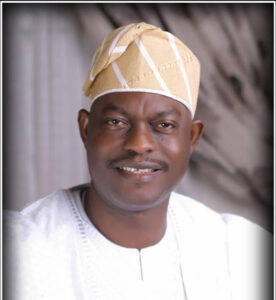

Mr. Babjide Olusola Sanwo-Olu, Governor of Lagos State
That the past administration at the federal level, just before the swearing-in of President Bola Ahmed Tinubu, PBAT, stampeded the contractor handling Lagos to Shagamu interchange leg of the Lagos-Ibadan express road, Julius Berger Plc, was too obvious to be denied.
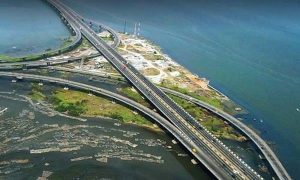
While in a hurry to complete the Secretariat- Berger/Kara/long-bridge axis of the Lagos-Ibadan express road, travelers coming into, and those traveling out of Lagos, especially citizens living in Shagamu, Mowe, and Ibafo areas who had to commute daily to and from Lagos for their livelihood, were subjected to agonizing experience which often made one’s adrenalin to be on edge. This condition became a signpost on that part of the road throughout the months of March, April, May, and June. The nightmare commuters were subjected to was simply heinous.
Yet, the situation has presently not abated. Ideally, citizens should not have been exposed to such an environment that was inimical to the health of the taxpayers and also to the good performance of the hundreds of thousands of vehicles that daily ply that road.
A recourse to available data would have instructed the contractor to the fact that Lagos to Shagamu is the busiest road not in Nigeria alone, but in West, Central, and East Africa. This would have compelled the contractor to be more considerate of motorists and the people that must commute on that road. And possibly another project execution methodology might have been adopted.
A better work plan would likely have been adopted with minimum disruption to the citizens’ businesses and one that would portend a very far less threat to the lives of travelers making use of that road.
Truth be told, the recent event on the Kara-Secretariat Express road via Berger, in and outward of Lagos State, has been a life-threatening experience. Succinctly put, the project had cost the lives of many innocent and tax-paying citizens who by the circumstance of the usual chaotic traffic occasioned by that project, were compelled to park their cars and hopped on Commercial motorcycles from Mowe to Berger bus stop.
As a result, some people were involved in motor accidents and died. Others had broken limbs which they now live with. If not for the chaotic traffic at that axis, people would not be forced to travel on a commercial motorcycle. Lives have been cut short by avoidable crashes on that road.
Out of the 24 hours in a day, we have 8 hours to labour in our various enterprises. Or better put, 12 hours of daylight, 6 am to 6 pm. This period is often utilized for commuting and engaging in various enterprises either as workers in both private and public sectors, or entrepreneurs in either small, medium, or large scale enterprises.
The contractor handling such a highly sensitive project ought to have considered social implications and where the people are of any regard, the night provides an excellent time for higher productivity for the contractor.
The amount of work that could be accomplished between 10 pm to 6 am, surely cannot be achieved in two days’ work on a broad day sunlight between 6 am and 6 pm, for obvious reasons.
In a daylight work scenario, several time is spent directing traffic. Another spend to assist in one form of emergency or the other, and other distractions too numerous to enumerate.
All those distractions identified and numerous others could be averted if the government compelled the contractor to do 75% of on-site work at night. And if the contractor should choose to dignify the citizenry, the construction firm could on its own initiative, chooses the time best for its maximum productivity- work at night.
INSECURITY: MUCH SLOGANIZED THREAT
At this juncture, a recourse to the scriptures to borrow a leaf from its admonition is no doubt relevant. The wise king Solomon while writing under inspiration in the book of Proverbs chapter 6 and verse 6 says, “Go to the ant, you lazy one; observe its ways and become wise”
In this discussion, and for the slight comparison to be made, none of the organizations mentioned in this report is lazy. “You lazy one” in the cited paragraph, has no iota of relevance to this comparative analysis. What will be dwelt on are, “Go to the ant” and “Observe his ways”.
The passage implores a higher being, which is a human being, to observe the ways of an ant, a lesser being, and become wise. In this context, our higher beings are, the multinational construction companies; Julius Berger Nigeria Plc, China Civil Engineering Construction Company, CCECC, Federal Ministry of Works, its parastatal, Federal Road Maintenance Agency, FERMA, to mention but a few.
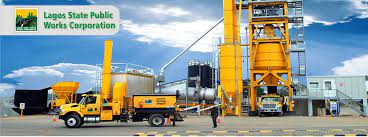
The ant in this discourse is the Lagos State Public Works Corporation, LSPWC. There is something our higher being, the multi-national construction companies, especially Julius Berger Plc, could learn from our ant.
There is no iota of doubt that the construction companies would cover more ground if they decide to work at night. Obviously, there would be far very less interference from the public. The question is, how does LSPWC discharge its duties to Lagosians with minimum disruptions?
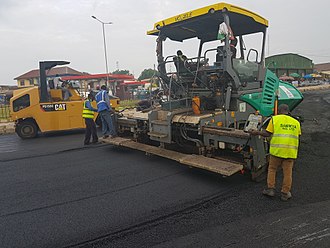
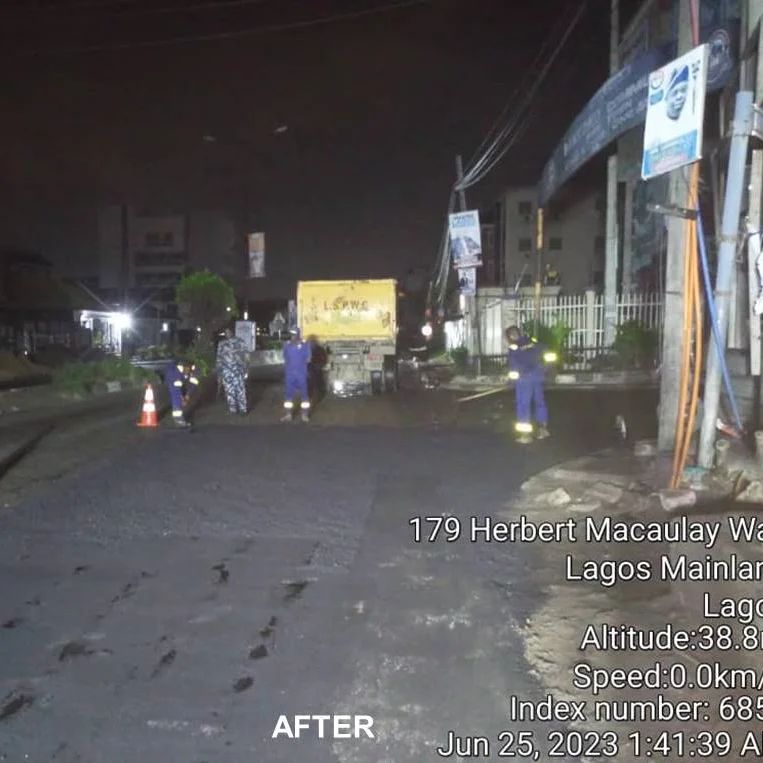
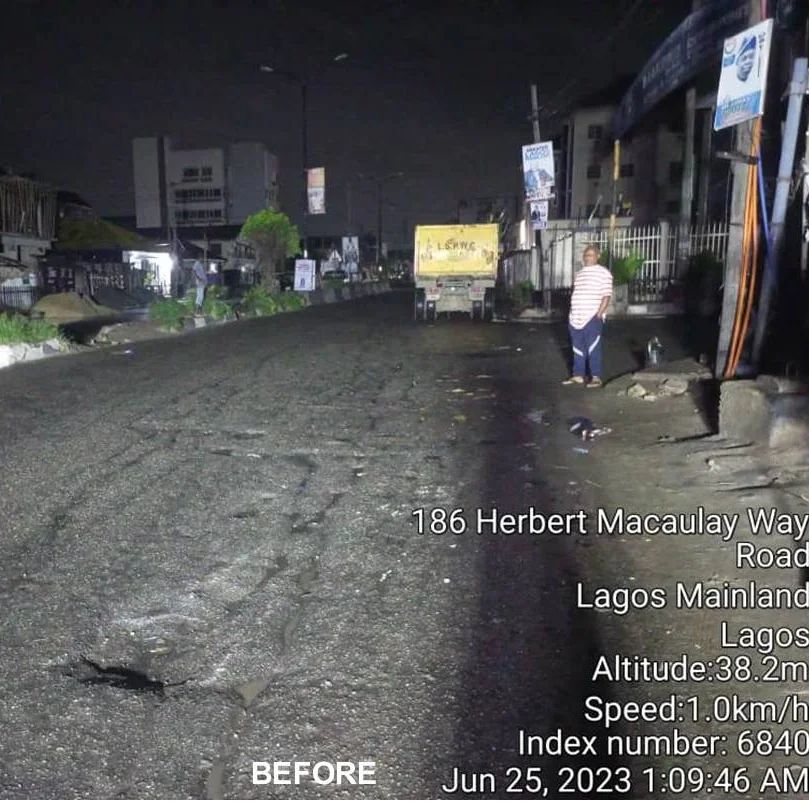
The corporation and its engineering crew work at night. The corporation often conducts independent security assessments of the areas earmarked for the night shift. And it often appropriately secured cover from security agencies, the police, and its anti-riot squad as the case may be.
By this approach, Lagosians who returned home from the office yesterday night, on a road needing rehabilitation, would hit that same road on their way to work the following morning and would be wondering if he/she was on the right route to the office/shop or not.
That is LSPWC’s near miracle. Such an approach comes from an organization that places a high premium on the people being served. Tax-payers Lagosians are the essence of Lagos state government. And Lagos State Government agencies have been schooled on a growth mindset. Hence, operatives in Lagos state government parastatals and agencies established to deliver various forms of services are the quintessential civil servants.
Before LSPWC with three state-of-the-art asphalt plants becomes the first government agency in profitable commercial engineering construction company, as a limited liability company, and perhaps with the view to be listed in the nation’s capital market, the current higher corporate engineering being, can still learn from LSPWC.
When the competition starts, by the time the transformation to LSPWC Ltd or LSPWC Plc happens, a strong competitor would have emerged in the construction industry of the nation’s economy and the golden opportunity to learn might have grown very dim. This is feasible.
About Post Author