
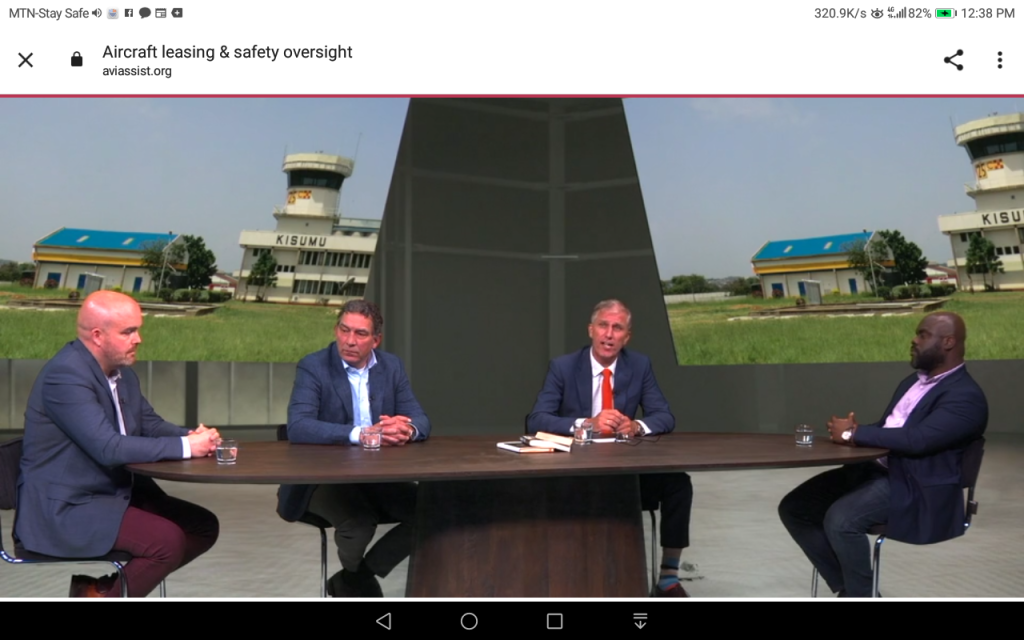
L-R: Tel Van Zundert, Richard Jacobs, Tem Kok, Director, of AviAssist Foundation, broadcast anchor, and Barrister Nana Agyemah Abubonsoah
Airlines prospecting in the African continent and ostensibly operating with barely enough working capital, and desirous of expansion, will no doubt find it rewarding to explore the prospect of aircraft leasing.
Also, those desirous of joining the class of successful startups, and the surviving startups with the impetus to break even in record time, and with the view to progress to making a profit, should also give careful consideration to leasing, or like you rent a car, rent aircraft to reducing drastically the financial burden of acquiring brand new aircraft.
It has also been explained that such a decision would enable an investor/airline operator to save at least 30 percent of the cost of brand-new aircraft hence, helping the investor to possess financial resources that could be used in another vital arm of operations and ultimately provides the much crucial tail wind for record financial success.
However, there are caveats deserving of serious attention so that success could be made of the reasonable investment in aircraft leasing by both the lessor and the lessee.
This much was inferred from the panel discussion organized by the renowned non-government organization with the resolution to promote air safety, and profitable commercial air transport in Africa, AVIASSIST.
Given the rationale for the subject at the panel discussion dubbed, FOCUS, and with the theme, “Safety of Aircraft Leasing”, Mr. Tem Kok, Director, of AviAssist Foundation said over fifty percent, (50%) of the aircraft in the skies are leased.
Kok noted that by that statistical fact, aircraft leasing cannot be a bad idea. He called the panelists’ attention to the issue of the complex lease agreement that has often been the subject of litigation when agreement goes awry.
He also called the attention of the panelist to the issue of aircraft registration and which country would exercise oversight, is it the country of registration or the country of operation?
Kok also prompted discussants on maintenance challenges that could trail not well spelled out terms in a lease agreement and also why maintenance and crew engagement devolve on a lessee, and on another occasion, the same responsibility devolves on the lessor.
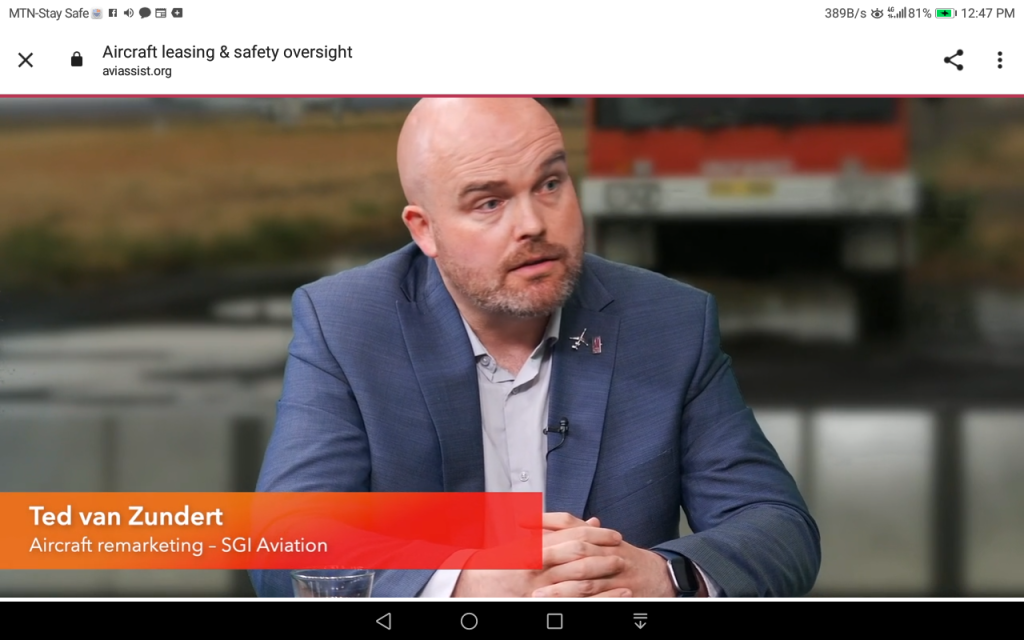
Having set the ball rolling, Tel Van Zundert, an aircraft remarketing expert, who works with SGI Aviation, enumerated circumstances that often compel leasing of aircraft.
Zundert said rout expansion oftentimes makes leasing imperative. He added that smart alec that yearns for a reduction in their capital outlay often avoid new aircraft but opt for a lease.
He also added that oftentimes when one or two aircraft are on routine check, the scheduled commercial operator wouldn’t want to lose its slots, and the airline management doesn’t want to invest in maintenance and ultimately lose loyal customers and money hence, lease aircraft often saves airlines’ much worries.
Richard Jacobs, Chief Commercial Officer, True Noord, emphasized that lessors are often very rabid about documentation and strict compliance to the maintenance schedule of a particular aircraft.
He argued that operators in Africa should rapidly embrace leasing to stimulate their growth as Africa’s potential in growing air travel is the second largest growth potential in the world, waiting to be harnessed.
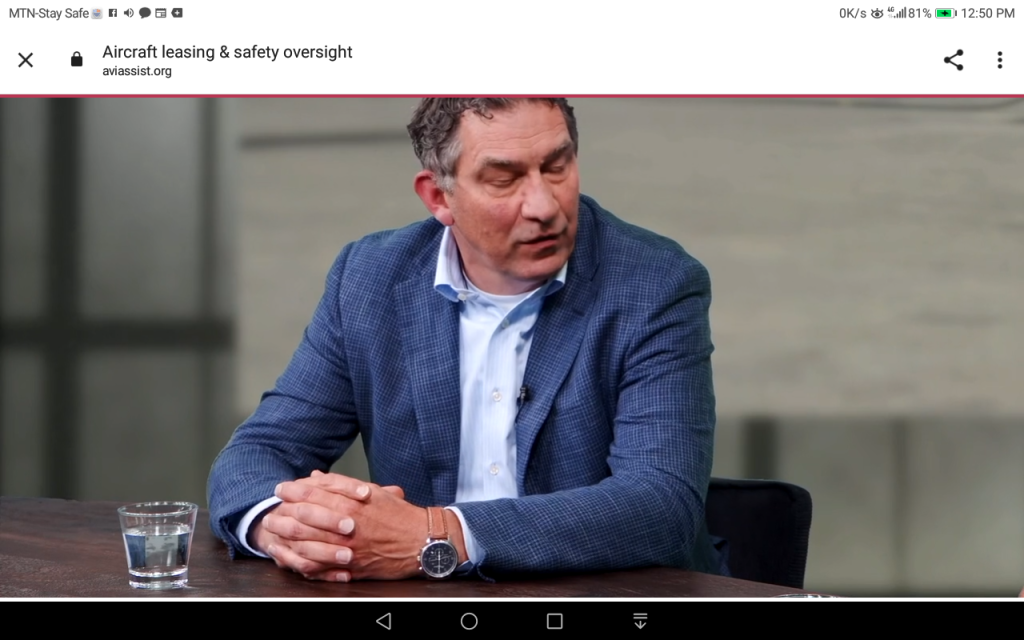
Jacobs however emphasized aircraft documentation which he said is imperative and must be up to date. He said documentation of maintenance and flights done helps the lessor keep track of the aircraft’s wellbeing, and if falling low, the lessor can quickly design an action plan to shore up the airworthiness of the aircraft.
He argued that the proper documentation of an aircraft enables traceability of its maintenance standard and also helps lessors preserve their assets.
Kok reminded discussants to shed light on what responsibilities are devolved to either the lessor or the lessee under the two types of leases available.
The barrister in the studio, Nana Agyemah Abubonsoah, a member of the Ghana Bar Association, said details of the responsibilities of each of the parties to the lease are often well captured in an unmistakable term in the lease agreement.
Abubonsoah however noted that where safety and maintenance standards are compromised have often been the source of litigation in aircraft leasing.
Richards called on African governments, regional bodies, and partners to stand by Africa and its airlines to drive the next growth the world is eagerly looking forward to breaking from the continent.
To these facts, civil aviation authorities in each of the sovereign states in the African continent need to work together. Regional and continental bodies; African Civil Aviation Commission, AFCAC, Association of African Airlines, AFRAA, African Development Bank, AfdB, etc.) should be compelled to give attention to air travel paraphernalia in Africa.
Well-thought-out coordinated efforts should help Africa reap the best from its potential in air travel and not allow the plundering of its assets in aviation by either Golf airlines, Asian airlines, or those of Europe and the US, to plow through the continent.
AVIASSIST: A quarter of a century of experience
AviAssist is the only independent, non-profit organization dedicated to promoting professionalism in African aviation safety.
For over 25 years we have been acting as a catalyst for safety improvements in African aviation: impartial & independent. We are the only regional partner to the renowned Flight Safety Foundation.
We were founded to provide affordable access to world-class safety promotion in Africa and that is what we still do today. Always learning, improving, and developing. Our BIG vision is a series of three AviAssist Safety Promotion Centres throughout Africa, starting in Rwanda. {source: www.aviassist.org}
About Post Author