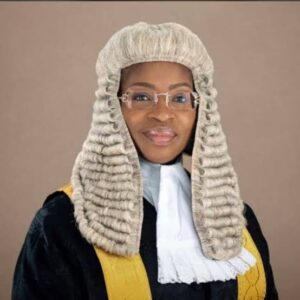
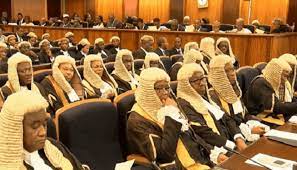
Nigerian Judges at a conference
Most people think addressing a female Judge as “Ma” is a show of respect, but in the courtroom, it’s actually wrong.
The law has its own language, and title matters. They are not about gender; they are about the office.
Here’s how it works;
Magistrate Court
In a Magistrate Court, you address the presiding Magistrate as “Your Worship.”
It doesn’t matter whether it’s a man or a woman.
So, you say:
“As Your Worship pleases.”

Customary Court
In a Customary Court, you say “Your Honour.”
That’s the official form of address for both male and female Presiding Officers in the Customary Court.
High Court
In the High Court, Court of Appeal, or Supreme Court:
You address the Judge or Justice as “My Lord” or “Your Lordship.”
Again, gender doesn’t change this.
Whether male or female, the proper address remains the same.
And here’s something many people don’t know
If you are ever unsure of the rank or the level of court, it’s safer and perfectly acceptable to use “Sir.” Yes, even for a woman. That’s because, in the legal profession, the term “Sir” is not about masculinity. It’s about professional respect.
In fact, there’s a saying at the Bar:
“There is no woman at the Bar; we are all gentlemen in skirts.”
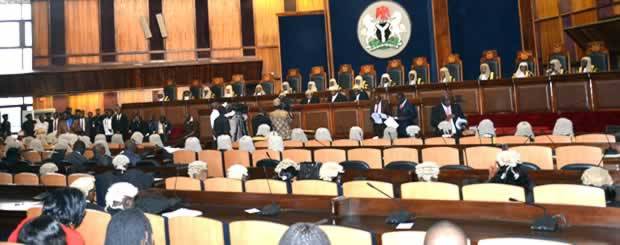
It’s a long-standing legal tradition meaning that in the eyes of the profession, every lawyer is regarded as a ‘gentleman’ of the Bar, regardless of gender.
So, next time you find yourself in court, whether as a lawyer, litigant, or observer, remember that Emotions or gendered titles don’t show respect in law.
Look
“There is no woman at the Bar; we are all gentlemen in skirts.”
MAGISTRATE
A magistrate in a Nigerian court typically appears in a judicial robe, presiding over a hearing from a raised bench, and handling cases within the limited jurisdiction of the magistrate’s court.
ROBE AND GROOMING
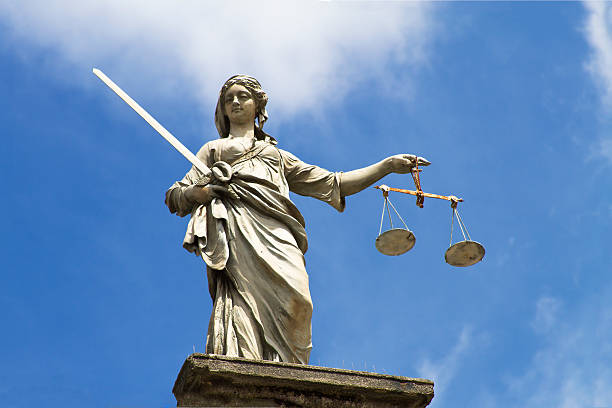
Magistrates and other judicial officers dress in a variety of official robes, within a modern courtroom setting, and may also include the iconic “Lady Justice” statue, which is present outside many courthouses.
Role: A magistrate is a judicial officer who handles minor cases, such as petty theft or low-level traffic violations, within a magistrates’ court.
Appearance: They wear traditional judicial robes while presiding over a court session.
Courtroom: The magistrate sits at the front of the courtroom on a raised platform, often behind a large wooden desk.
Symbolism: The “Lady Justice” statue, featuring a sword and scales, is a common symbol often seen outside Nigerian court buildings, symbolising impartiality and justice.
Dr George Ogunjimi, a Lawyer, Historian, Journalist, and World Affairs Commentator, writes from Hertfordshire, UK.
About Post Author