Nigerian airlines have been persuaded to conduct background checks on pilots as a precondition to their employment, as some with commitments to previous employers often abscond after enormous investment had been committed to their training, certification and type rating.
The State governments’ owned airlines have also been found culpable of poaching pilots who have been trained and engaged despite the fact that some signed a bond before they proceeded for the training, and often, still have years of service ahead in fulfilling the conditions of the bond.
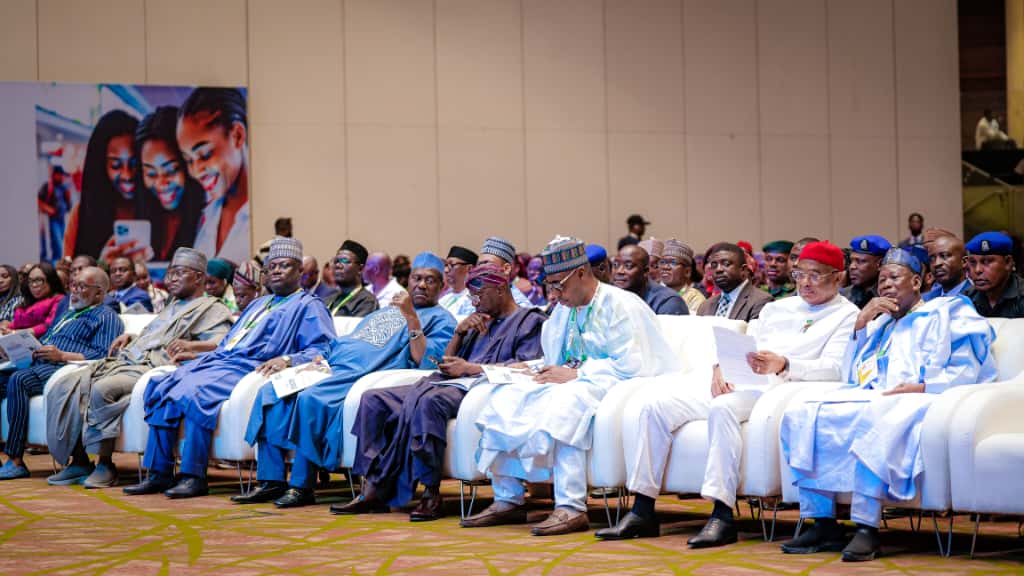
Dr Allen Oyema, Managing Director of Air Peace Airline, made the allegation at the well-attended and well-organised national aviation conference hosted by the Federal Airports Authority of Nigeria (FAAN) at the Eko Hotel and Suites Conference Centre, Victoria Island, Lagos.
He said it costs about N15m to train a pilot, and after a company had spent so much for the training and upgrading some of its pilots, other airlines without scruples are preoccupied with poaching trained, and type-rated pilots.
The Air Peace Chairman said the funniest part of the debacle was that on most occasions those pilots poached were under bond for the training yet, they were engaged by a fellow operator on the domestic terrain.
Hence, Onyema called for a rethink among fellow members of the Airline Operators of Nigeria, AON, who were culpable for the unethical manner of hunting and recruiting critical manpower for their operations.
Dr Onyema who’s also the Vice Chairman of the Airline Operators of Nigeria, AON, declared that all airlines prospecting on the domestic routes maintained international safety standard, and were as fit as any airline in the best of climes in planet earth.
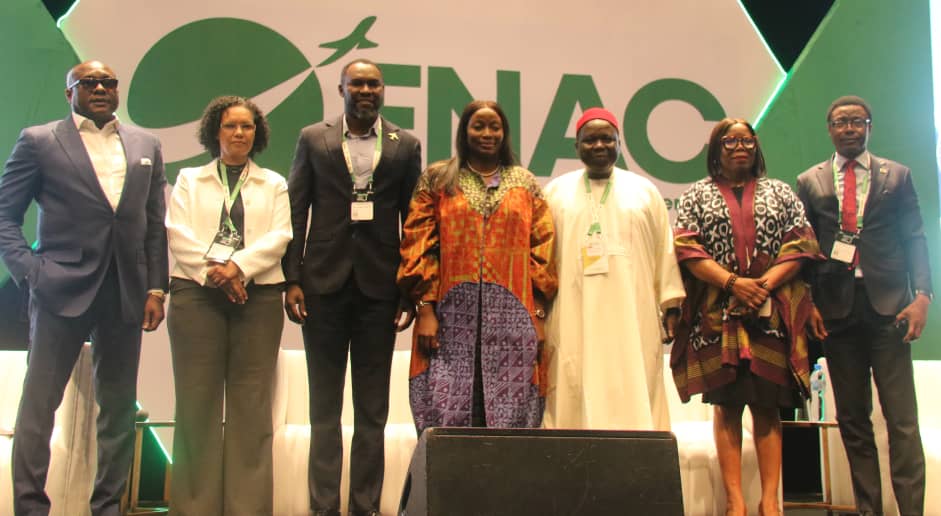
Captain Ado Sanusi, Managing Director, Aero Contractors noted that contribution and support of all the government aviation agencies are critical before any airline in Nigeria can lay claim to successful operations.
He cited as an example from one of the tasks of the Nigerian Airspace Management Agency, NAMA, which is to train new and young personnel to be fit to safely function professionally, but noted that often times when the aircraft is cleared for takeoff, it will still be delayed on the runway/holding bay much longer than necessary just because, according to explanation from NAMA, the cadets were on training, which in turns caused airline to burn fuel more than necessary.
Sanusi asked who should rightly pay for the cost of the extra fuel wasted as a result of such actions which compelled the Pilots to burn more fuel than envisaged? He noted though sadly that, the airline was in no way responsible for the cause of the delay and fuel wastage yet, airliners solely were left with the financial burden of the extra fuel burnt just because NAMA was honing the skills of its cadets.
Ado Sanusi argued that those seemingly little acts, from NAMA, from the airport manager, from the meteorologist, among other agencies, if summed up, greatly impact on airlines’ profitability.
He also added that other factors from government agencies might cause delay and at times cancellation yet, the regulatory authority drumming up reform on consumer maters and breathe down on airlines to make refund.
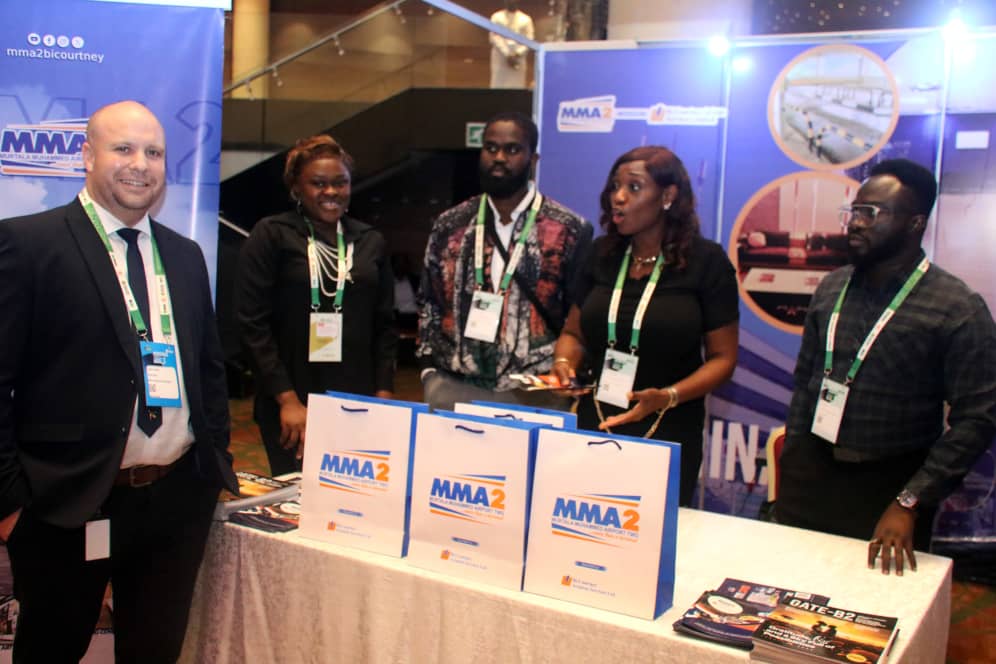
BASL at FNAC L-R: Justin Bam, Maintenance Manager, Execujet being attended to by Funmilayo Ayanwusi, Media Executive; Gboyinwa Ajomale, Corporate Communications Officer; Ajoke Yinka-Olawuyi, Head, Corporate Communications; Blessing Dare, Creative Designer, all of Bi-Courtney Aviation Services Limited, BASL, concessionnaire MMA2
The Aero Contractors helmsman called for a total reform program for the entire gamut of the aviation value chain so that the industry as one would match ahead in tandem without creating more burden for any of the link in the value chain.
In his presentation, Engr Balami Isaac David, Chairman of 7Stars Global Hangar, who is also the Founder of Isaac Balami University of Aeronautics and Management, IBUAM, said maintenance done overseas amounted to about $1.5bn in capital flight from the national economy.
He demanded for more Maintenance, Repairs, and Overhaul, (MRO), facility to conduct various maintenance needs of the domestic air operators and others in the West Coast of Africa, and the entire airlines in African contient.


Balami however, identified lack of cooperation and collaboration as the bane to economic of scales in the sector. He said the equipment needed for an MRO are many and very expensive to procure.
He however noted that if cooperation and collaboration exist on equipment, and tooling, capital needed would be reduced yet the MRO service providers would enjoy economic of scale.
About Post Author