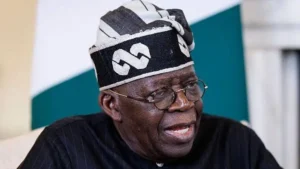
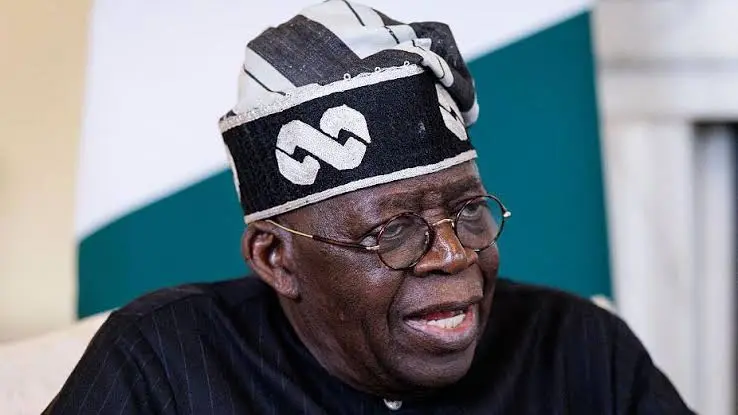
President Bola Ahmed Tinubu
A Review of Nigeria’s Economic Transformation, Policy Reforms, and the Quest for Shared Prosperity
By Barr. George Bamidele Olufemi Ogunjimi Esq.
Global Legal Coordinator Renewed Hope Agenda Diaspora.
INTRODUCTION
Since assuming office on May 29, 2023, President Bola Ahmed Tinubu has embarked on a series of significant economic reforms aimed at repositioning Nigeria for sustainable growth, fiscal stability, investment, and long-term prosperity. His administration inherited an economy confronted by rising public debt, foreign exchange challenges, petrol subsidy costs, inflation, unemployment, and persistent infrastructure deficits.
Under the Renewed Hope Agenda, the administration introduced far-reaching policy changes intended to address longstanding structural problems and establish a more sustainable economic foundation.
Among the most consequential measures are the removal of the petrol subsidy, the reform of the foreign exchange market, changes to public revenue administration, efforts to strengthen domestic production, and initiatives to attract investment.
However, the impact of these policies remains a subject of public debate. While official and international assessments have identified improvements in some economic indicators, many Nigerian households continue to face significant challenges associated with food prices, transportation costs, purchasing power, and employment.
The central question, therefore, is not simply whether reforms have been introduced, but whether those reforms can translate into tangible improvements in the lives of ordinary Nigerians.
- The Removal of the Petrol Subsidy: A Fundamental Policy Shift
One of President Tinubu’s most consequential decisions was the removal of the petrol subsidy announced during his inauguration on May 29, 2023.
For many years, the subsidy represented a substantial government expenditure. Successive administrations faced difficulties sustaining the arrangement while meeting other national development needs.
The Tinubu administration argued that removing the subsidy would reduce fiscal pressure, limit opportunities for abuse, and free up resources for infrastructure, education, healthcare, and other public services.
The policy fundamentally changed Nigeria’s domestic fuel pricing system.
The expected benefits include:
- Reducing government expenditure on petrol subsidies.
- Creating additional fiscal space for public investment.
- Encouraging private-sector participation in the downstream petroleum industry.
- Promoting a more market-oriented energy sector.
- Enabling federal, state, and local governments to receive and allocate increased public revenues.
Nevertheless, the immediate consequences for households were substantial. Higher petrol prices increased transportation and distribution costs, contributing to the wider cost-of-living crisis.
The World Bank has acknowledged the potential fiscal benefits of Nigeria’s reforms while emphasising the need to protect vulnerable households and ensure that the resulting economic gains translate into improved living standards.
The ultimate measure of this reform will be whether the resources saved are transparently managed and converted into visible improvements in public services, infrastructure, and household welfare.
- Foreign Exchange Reform: Restructuring the Naira Market
Another major policy shift was the reform of Nigeria’s foreign exchange market.
Before the reforms, multiple exchange-rate arrangements and restrictions complicated access to foreign currency. These conditions created distortions, discouraged some investors, and contributed to uncertainty in international transactions.
The administration pursued greater exchange-rate flexibility and the unification of official foreign exchange windows, with the objective of improving transparency and allowing market conditions to play a greater role in determining the value of the naira.
The reform was intended to:
- Improve access to foreign exchange through the official market.
- Reduce distortions arising from multiple exchange rates.
- Strengthen confidence among domestic and international investors.
- Improve the transparency of foreign exchange transactions.
- Support a more sustainable external payments position.
The International Monetary Fund has identified foreign exchange reform, changes to petrol subsidies, and improvements in public financial management as important components of Nigeria’s efforts to strengthen macroeconomic stability.
However, exchange-rate reform has also involved considerable adjustment costs. Naira depreciation increased the domestic cost of imported goods, machinery, raw materials, and other dollar-denominated items.
For businesses dependent on imported inputs, these changes created additional financial pressure. Consumers also experienced the effects through higher prices.
Consequently, the long-term success of foreign exchange reform will depend on exchange-rate stability, stronger domestic production, improved export performance, and greater confidence in Nigeria’s economic environment.
- Tax and Fiscal Reforms: Strengthening Government Revenue
A major challenge facing Nigeria has historically been the ability to generate sufficient public revenue to finance national development.
President Tinubu’s administration has pursued changes intended to improve revenue mobilisation, strengthen fiscal coordination, and make public finances more sustainable.
Increased revenue can provide governments with greater capacity to finance roads, schools, hospitals, security, water supply, electricity, and other essential services.
According to the Nigerian government’s account of the World Bank’s October 2026 Nigeria Development Update, reforms implemented since 2023 contributed to a substantial increase in federation revenues between 2023 and 2025. The report also highlighted increased capital spending by states, particularly on economic infrastructure.
These developments are important because Nigeria’s federal structure means that revenue changes can affect all three tiers of government.
Nevertheless, increased revenue alone does not guarantee prosperity.
The quality of public expenditure, transparency in procurement, project completion, and accountability for public funds remain essential.
For ordinary Nigerians, the practical test is whether increased government revenue results in better roads, more reliable electricity, improved healthcare, quality education, and greater economic opportunity.
- Infrastructure Development: Building the Foundation for Growth
Infrastructure is central to Nigeria’s long-term economic transformation.
Poor roads, inadequate electricity, limited railway connectivity, and insufficient logistics infrastructure increase the cost of doing business and constrain productivity.
The Tinubu administration has continued to pursue infrastructure projects intended to improve connectivity, support trade, facilitate agricultural distribution, and encourage industrial development.
The economic importance of infrastructure extends beyond the construction of physical assets.
Well-planned infrastructure can:
- Reduce transportation and distribution costs.
- Connect farmers to markets.
- Improve access to schools and healthcare facilities.
- Support manufacturing and industrial expansion.
- Encourage domestic and foreign investment.
- Create employment during construction and subsequent operations.
The World Bank’s October 2026 assessment reported that states had increased real capital spending between 2023 and 2025, with much of the increase directed towards roads, transport, agriculture, energy, and housing.
However, infrastructure development must be assessed against measurable outcomes.
The number of projects announced is less important than the number completed, their quality, their maintenance, and the benefits they deliver to communities.
For Nigeria to achieve sustainable prosperity, infrastructure investment must also be accompanied by transparent financing, effective project management, and equitable geographical distribution. The Tinubu’s administration has proven that the best solution is the aggressive pursuit of equitable geopolitical distribution of infrastructure investments.
- Petroleum Industry Transformation and Domestic Refining
Nigeria possesses substantial petroleum resources, yet for decades the country depended heavily on imported refined petroleum products.
This dependence exposed the economy to foreign exchange pressures, international price movements, and supply-chain disruptions.
The transition towards market-based fuel pricing has increased the importance of domestic refining capacity and private investment in the petroleum sector.
The development of large-scale domestic refining facilities, including the Dangote Petroleum Refinery, represents an important change in Nigeria’s industrial landscape.
Increased domestic refining capacity has the potential to:
- Reduce dependence on imported refined petroleum products.
- Lower exposure to certain international supply disruptions.
- Support domestic industrial activity.
- Create employment opportunities.
- Strengthen linkages between the petroleum and manufacturing sectors.
- Create opportunities for petroleum-product exports.
The IMF identified domestic private refining capacity as a development that could help Nigeria move further up the petroleum value chain.
Nevertheless, the existence of domestic refining capacity does not automatically guarantee cheaper fuel.
Actual benefits depend on production volumes, operating costs, competition, distribution efficiency, exchange-rate conditions, and the relationship between domestic prices and international market prices.
The broader objective should be to build a petroleum industry that contributes more effectively to domestic industrialisation, employment, government revenue, and energy security.
- Agriculture and Food Security: The Battle Against Hunger.
Agriculture remains fundamental to Nigeria’s economy because it supports livelihoods, supplies raw materials, and contributes to national food security.
However, insecurity, high transport costs, inadequate storage, limited access to finance, climate-related challenges, and rising input prices continue to affect agricultural productivity.
The Tinubu administration has identified agricultural development and food security as important national priorities.
For these priorities to translate into lasting results, Nigeria requires a comprehensive approach that addresses both agricultural production and the systems connecting farmers to consumers.
Key priorities include:
- Expanding access to affordable fertilisers, improved seeds, and appropriate farming technologies.
- Strengthening irrigation and rural infrastructure.
- Improving security in farming communities.
- Expanding agricultural financing and extension services.
- Developing storage facilities and food-processing industries.
- Reducing transportation and distribution costs.
- Supporting smallholder farmers and agricultural enterprises.
The World Bank has emphasised that reducing food inflation requires addressing structural constraints involving agricultural inputs, security, transport, storage, and market access.
Food security is particularly important because economic growth means little to a family that cannot afford basic meals.
A successful agricultural transformation must therefore deliver measurable improvements in food availability, affordability, farmers’ incomes, and rural employment.
- Social Protection: Ensuring That Reform Benefits Reach Ordinary Nigerians
Economic reforms can produce long-term benefits while imposing immediate costs on households.
This creates a responsibility for government to provide effective support to people who are least able to absorb economic shocks.
In Nigeria, vulnerable groups include low-income households, informal-sector workers, unemployed young people, persons with disabilities, and families facing food insecurity.
The federal government has pursued social intervention measures, including cash transfers intended to support eligible vulnerable households.
However, the effectiveness of these programmes depends on accurate beneficiary identification, reliable payments, adequate funding, transparency, and independent monitoring.
The IMF’s 2026 assessment reported that 9.2 million households had been enrolled in Nigeria’s cash-transfer system, against a target of 15 million households. It also noted that the assistance received by enrolled households had been limited, underscoring the need to strengthen social protection.
These findings illustrate an important distinction: announcing a social intervention is not the same as demonstrating that it has adequately protected households.
For reforms to achieve broad public acceptance, government must ensure that assistance reaches eligible beneficiaries promptly and meaningfully reduces hardship.
The objective should be to help households withstand economic shocks while improving access to education, healthcare, skills, and productive employment.
- Education, Healthcare, and Human Capital Development
A nation’s prosperity depends not only on financial resources and infrastructure but also on the capabilities of its people.
Education equips citizens with knowledge and skills, while healthcare supports productivity, life expectancy, and general well-being.
Nigeria’s long-term development therefore requires sustained investment in human capital.
Priority areas include improving the quality of basic education, expanding access to technical and vocational training, strengthening universities, supporting research, improving primary healthcare, and reducing barriers to essential medical services.
The administration’s education financing initiatives and wider development programmes should be evaluated by their accessibility, affordability, implementation, and measurable impact.
For example, student financing can help eligible students overcome immediate financial barriers to higher education. Its long-term value, however, depends on fair access, effective administration, and whether graduates can obtain productive employment.
Similarly, healthcare investment should be assessed through service quality, staffing, medicine availability, affordability, and access to essential treatment.
The ultimate objective of economic reform should be to develop people who can participate productively in the economy and share in the benefits of national growth.
- Economic Growth, Inflation, and the Reality of Everyday Life
An important question in assessing President Tinubu’s reforms is whether Nigeria’s improving macroeconomic indicators are translating into better living standards.
The evidence available in October 2026 presents a mixed picture.
According to Reuters, Nigeria’s economy grew by approximately 4.4% year-on-year in the second quarter of 2026. The National Bureau of Statistics reported headline inflation of 14.63% in September 2026, down from 15.39% in August.
These figures require careful interpretation.
Economic growth indicates that the value of economic output is increasing after accounting for price changes. It does not necessarily mean that every household is experiencing higher disposable income.
Likewise, falling inflation means that prices are increasing more slowly; it does not mean that prices have returned to their previous levels.
This distinction matters enormously to Nigerian families.
A household that previously spent a certain amount on food, transport, rent, and school fees may continue to struggle even when the inflation rate declines, particularly if wages and business earnings have not kept pace with earlier price increases.
The International Monetary Fund’s June 2026 assessment also highlighted the continuing severity of poverty and food insecurity, despite improvements in certain macroeconomic indicators.
Consequently, the administration’s economic performance must be evaluated through both national economic indicators and the lived experiences of citizens.
Growth becomes more meaningful when it generates productive employment, improves purchasing power, expands access to essential services, and reduces poverty.
- Investment, Entrepreneurship, and Job Creation
Nigeria’s large population, entrepreneurial culture, natural resources, and substantial domestic market offer significant opportunities for economic development.
However, unlocking this potential requires a business environment that supports investment, innovation, and enterprise growth.
The Tinubu administration’s economic reforms have sought to improve macroeconomic conditions and strengthen the foundations for private-sector investment.
For businesses to respond positively, several challenges must be addressed:
- High and unpredictable operating costs.
- Unreliable electricity supply.
- Limited access to affordable financing.
- Foreign exchange uncertainty.
- Inadequate transport and logistics infrastructure.
- Multiple regulatory and administrative burdens.
- Insecurity affecting businesses and supply chains.
Small and medium-sized enterprises deserve particular attention because they play a major role in employment and local economic activity.
A stronger economy should enable entrepreneurs to establish businesses, expand production, hire workers, and compete effectively.
The success of economic reform should therefore be measured partly by the growth of productive businesses, the creation of decent jobs, the expansion of exports, and improvements in labour productivity.
Without sufficient employment opportunities, economic growth may fail to deliver meaningful improvements for a large proportion of Nigeria’s population.
- The Challenges That Could Delay the Journey to Prosperity
Despite the policy changes introduced since 2023, Nigeria continues to face significant structural challenges.
Recognising these difficulties is essential to an honest assessment of the country’s economic direction.
Persistent cost-of-living pressures
High food, transport, housing, and energy costs continue to affect household budgets. Even when inflation declines, the cumulative increase in prices can leave families under substantial financial pressure.
Poverty and inequality
Economic growth does not automatically benefit all citizens equally. Targeted policies are needed to expand opportunities for low-income households and disadvantaged communities.
Insecurity
Insecurity disrupts farming, trade, transportation, investment, and access to essential services. It can also discourage businesses from investing in affected areas.
Infrastructure deficits
Unreliable electricity, inadequate transport networks, and insufficient logistics infrastructure continue to raise the cost of production.
Public-sector accountability
Increased public revenue must be matched by transparent budgeting, efficient expenditure, credible procurement, and effective monitoring of government projects.
Employment challenges
Nigeria needs more productive jobs, particularly for young people entering the labour market. Economic expansion must be sufficiently broad-based to absorb the growing workforce.
These challenges do not erase the importance of reform. They demonstrate why policy implementation, institutional capacity, and social protection are indispensable to its success.
The World Bank has similarly stressed that improvements in macroeconomic stability must be accompanied by measures that address poverty, food inflation, infrastructure constraints, and the quality of public spending.
- From Economic Reforms to Shared Prosperity: What Must Happen Next?
For the reforms introduced under President Tinubu to deliver lasting national benefits, the next phase must focus on translating macroeconomic improvements into measurable gains for citizens.
Several priorities deserve sustained attention.
First, stabilise prices and strengthen purchasing power. Monetary stability should be accompanied by improvements in agricultural productivity, transport infrastructure, and domestic production.
Second, expand productive employment. Investment in manufacturing, agriculture, technology, construction, and small businesses can help create more sustainable sources of income.
Third, strengthen social protection. Vulnerable households require reliable and adequately funded assistance while they adjust to economic changes.
Fourth, improve electricity and infrastructure. Lower operating costs would help businesses expand production, employ more workers, and compete in domestic and international markets.
Fifth, strengthen public financial accountability. Citizens should be able to track how public revenue is collected, allocated, and spent.
Sixth, deepen agricultural transformation. Higher agricultural productivity and more efficient distribution systems are essential to improving food security.
Seventh, invest in human capital. Quality education, accessible healthcare, and relevant technical skills are fundamental to sustainable prosperity.
Finally, measure progress by outcomes rather than announcements. Completed projects, jobs created, real household incomes, poverty reduction, and improved access to essential services should guide public assessments of government performance.
These priorities would help connect the administration’s economic strategy to the practical needs of Nigerian citizens.
Conclusion: ThThe Journey from Reform to Prosperity
President Bola Ahmed Tinubu’s administration has introduced significant changes to Nigeria’s economic policy framework since May 2023. Petrol subsidy removal, foreign exchange reforms, revenue mobilisation, and efforts to encourage investment have altered the country’s economic landscape.
Assessments by the World Bank and the IMF indicate that these measures have contributed to improvements in many areas of macroeconomic stability, government revenue, and economic resilience. More recent economic data also indicate continued growth, although inflation and household welfare remain important concerns.
Yet, reforms should not be judged solely by the scale of the decisions taken or the number of policies announced.
Their enduring significance will depend on whether they produce a more productive economy, create decent jobs, strengthen public services, reduce poverty, and improve the purchasing power of ordinary Nigerians.
For a trader in Lagos, a farmer in Benue, a student in Kano, a manufacturer in Aba, or a family in a rural community, prosperity is measured in practical terms: affordable food, reliable electricity, accessible healthcare, quality education, personal security, and opportunities to earn a decent living.
The challenge before Nigeria is to ensure that the adjustments associated with economic reform lead to a future in which these opportunities become more widely available.
Ultimately, the transition from reforms to prosperity requires more than sound economic policies. It requires effective implementation, accountable institutions, productive investment, social protection, and a sustained commitment to improving the lives of citizens.
The enduring measure of the Renewed Hope Agenda will be whether Nigeria can turn its economic potential into shared prosperity—one in which national progress is reflected not only in government revenue and economic growth, but also in the dignity, security, and well-being of its people.
George Ogunjimi Esq
jurisrepubliclegal@gmail.com
19/10/2026.
About Post Author