

By Johan M. Westerhoff
The Central Principle
Nigeria does not need another national carrier. It needs a mature aviation ecosystem in which several professionally managed Nigerian airlines compete, cooperate and specialize within a national, regional and international networks.
Government should remain outside airline ownership, management and airline finance. The government obligation is different and more fundamental which includes, building and maintaining airports, providing air-navigation and ground infrastructure, safety and security systems, efficient immigration and customs interfaces, public transport access, emergency and medical services, and the regulatory environment within which professional aviation entrepreneurship can flourish.
The commercial risk of aircraft acquisition, airline management and route development should remain with professional operators, investors, lessors, banks and specialist aviation-finance institutions. Public policy should be designed and executed with the sole aim of creating an enable environment to make the market vibrant and attractive. Government should resist the temptation to run the market.
Succinctly put, government should build and protects the platforms. And encourage Professional airliner entrepreneurs to fly the aircraft with the view to achieving commercial success.
Nigeria Must Become a Gateway, Not Merely a Large Origin Market
Nigeria already generates enormous aviation demand through business, family travel, the diaspora capital repatriation, education, government activities, trade, tourism and professional mobility. Yet, a large share of this demand is absorbed into foreign hub systems instead of a Nigerian hub. Nigerian passengers often leave Nigeria and enter the world through another country’s network.
The next stage of aviation development should be to make Nigeria itself a place through which people deliberately travel – from Nigerian cities into the world, from West and Central Africa into Nigerian gateways, and from international markets into Nigeria and onward across the regions.
The objective is therefore not simply more flights. It is a Nigerian aviation platform that generates economic activities before, during and after the journey.
A Diverse Nigerian Airline System
Nigeria should build around diversity rather than a single flag carrier. Air Peace, United Nigeria Airlines, Ibom Air and other professionally qualified private or state-sponsored operators can occupy different positions within one connected market.
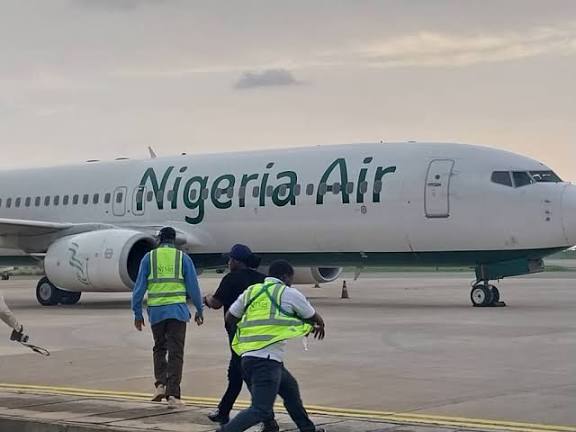
Smaller and medium-sized aircraft should serve domestic and cross-border regional markets where frequency and right-sized capacity matter more than prestige. Larger Nigerian operators can build trunk, regional and intercontinental networks, independently or through commercial cooperation with international airline systems.
State ownership of an airline, where it already exists, should never imply political management. Every operator should be governed by professional aviation standards, transparent accounts, commercial discipline, safety performance and management accountability.
Feed Nigerian Gateways Before Foreign Hubs
A passenger beginning a journey in a secondary Nigerian city should, wherever commercially practical, be able to enter the international aviation system through Nigeria. Likewise, passengers from neighbouring African countries should increasingly be able to connect through Nigerian gateways en route to the outer world.
Lagos can remain the principal commercial and intercontinental gateway. Abuja can develop government, diplomatic, conference and central-Nigerian connectivity.
Kano can serve northern Nigeria, Sahel, Gulf, pilgrimage and trade markets. Enugu can develop Southeast and diaspora connectivity. Port Harcourt can serve the energy, industrial and South-South economy. Other airports should feed these gateways or develop specialized routes where genuine demand exists.
Not every airport needs its own London, New York or Dubai service. Every viable airport needs reliable access to a Nigerian network that can connect its passengers to those destinations.
International Cooperation and Route Parity

Nigeria should welcome foreign airlines and the connectivity they provide, but international access should contribute to the development of the Nigerian aviation system. Strategic bilateral relationships should therefore pursue meaningful reciprocity and Nigerian participation.
Where market size, bilateral rights and commercial economics permit, Nigeria should seek balanced route participation, with a 50:50 sharing objective on important bilateral markets. This need not mean identical aircraft or identical frequencies on every route. It means that Nigerian carriers should have a realistic opportunity to participate in the value created by Nigeria’s own traffic.
Codeshare, interline, coordinated schedules, through-ticketing, baggage integration and deeper commercial partnerships can supplement direct route sharing. The objective is not isolation from international airlines, but integration with them from a position that strengthens Nigerian aviation capability.
Finance Must Remain Commercial
Aircraft and aviation assets require long-term capital, but government should not become the financier of airlines. A sovereign airline fund financed or guaranteed by government risks returning aviation to political allocation, recurrent rescue and distorted competition.
Nigeria should instead create the legal, monetary and investment environment in which private aviation-finance vehicles can operate. Nigerian banks, pension and institutional investors, international lessors, export-credit structures, development institutions and specialist aviation funds can participate in properly structured financing.
A dedicated privately capitalized Nigerian Aviation Investment and Leasing Platform could offer asset-backed financing with repayment periods ranging broadly from one to fifteen years, depending on aircraft age, asset type and risk. Government’s contribution should be stable regulation, enforceable contracts, predictable taxation and customs treatment, international-standard aircraft registration and repossession rules, and efficient foreign-exchange mechanisms – not the assumption of airline commercial risk.
Finance must follow professional performance. Operators seeking long-term capital should demonstrate audited accounts, regulatory compliance, governance, viable route economics, appropriate fleet and credible repayment capacity.
The Airport Is Only the Beginning
An aviation gateway cannot be created by runways and terminals alone. The visitor experiences a chain: aircraft, immigration, baggage, communications, transport, accommodation, business or leisure activity, healthcare and security, followed by the return journey. Nigeria’s public responsibility is to ensure that the essential infrastructure works smoothly: safe airports, dependable utilities, secure access roads, public and regulated private transport, emergency response, health facilities, communications, immigration and customs processing, sanitation and passenger protection.

Private enterprise should build around that foundation – hotels, B&Bs; short-stay apartments, resorts, restaurants, conference services, tour operators, travel agencies, cultural programs, medical services, retail and business-support networks.
From Ticket Sellers to Destination Builders
Nigerian travel agencies and tourism entrepreneurs should increasingly become network and destination developers. They should package the complete Nigerian experience rather than merely issue airline tickets.
Lagos can offer business and cultural stopovers. Abuja can package diplomatic, conference and governmental travel. Kano can build trade and northern heritage products. Enugu and the Southeast can develop diaspora and cultural journeys. Uyo, Calabar and other destinations can combine regional aviation with leisure, cultural and coastal products.
The visitor arriving by air should become a customer of the wider Nigerian economy.
Turn Transit into Economic Activity
A mature Nigerian gateway should provide different products for different connection times. A short connection requires a protected, efficient transit experience. A twelve-to-twenty-four-hour connection can support an airport hotel and organized city experience. Two or three days can become a Nigerian stopover. Longer stays can combine business, heritage, leisure, medical services, diaspora visits and
investment activity.
The economic objective should therefore extend beyond passenger numbers to visitor value: how much local economic activity is generated by each additional passenger movement?
Reliability Is Nigeria’s Strongest Advertisement
Nigeria cannot advertise itself into aviation maturity. It must operate itself into aviation maturity.
The strongest international recommendation will come from the traveller who can say: the flight operated reliably; the connection worked; the luggage arrived; immigration was professional; transport
was waiting; prices were transparent; the hotel was dependable; the environment felt secure; the business appointment happened; and the return journey worked.
Service standards should therefore be measured across airport processing, baggage, connections, customer care, sanitation, digital information, transport, security assistance, medical response and
complaint resolution.
Aviation as National Social Infrastructure
A strong aviation system connects more than tourists. It connects Nigerian families, universities, hospitals, businesses, investors, manufacturers, professionals and public institutions.
It can connect northern enterprise with Lagos and West Africa, Southeast business with diaspora markets, regional communities with specialist healthcare and education, and Nigerian products with international customers. Aviation becomes part of the country’s social and economic infrastructure that Nigeria Aviation shall Activate, alongside roads, ports, telecommunications and digital finance all things being equal.
The Mature Nigerian Model
Nigeria should develop its own model: multiple professional airlines rather than a national carrier; entrepreneurship rather than political airline management; specialized operators rather than unnecessary duplication; domestic and regional feeders linked to Nigerian gateways; balanced international partnerships; private long-term aviation finance; and airport infrastructure integrated with the wider economy.
Government should build and protect the platform. Professional entrepreneurs should operate the airlines. Private finance should fund commercially sound aircraft and expansion. Hospitality and tourism businesses should transform passengers into visitors. Local enterprise should capture the economic activity created around those visitors.
From ‘Fly Out and Come Back’ to ‘Come Through Nigeria
Nigeria’s population has made the country an attractive destination for the world’s airlines. That should be the foundation of the next stage, not the conclusion of aviation policy.
The strategic ambition should be to make Nigeria attractive not only because Nigerians need to travel, but because Africans and the wider world find Nigeria convenient, reliable and worthwhile as a place through which to travel, conduct business, invest, visit and connect.
That transformation will not be achieved by another government airline. It will come from a diversified Nigerian airline industry, reliable public infrastructure, competitive private finance, meaningful international partnerships and a national visitor environment that welcomes people professionally.
Then aviation ceases to be merely a means for Nigerians to leave and return. It becomes an instrument through which Nigeria connects itself, connects Africa and welcomes the world to leisure and business.

About Post Author