

Sir Keir Rodney Starmer, 62, KCB, KC, is the first Labour Prime Minister since 2007, with his wife, Lady Victoria Starmer, 49
The United Kingdom (UK) Home Office’s hostile environment policy is a set of administrative and legislative measures designed to make staying in the United Kingdom as difficult as possible for people without leave to remain, in the hope that they may “voluntarily leave
Since 2010 the Government has launched a wave of attacks on the human rights of undocumented people – meaning people who can’t prove they have a right to live in the UK – through a set of policies known as the ‘hostile environment’.
The idea is to make life in the UK as unbearable as possible for undocumented migrants so that they leave – and others think twice about coming – by blocking access to public services and pushing them into extreme poverty.
Under the hostile environment, employers, landlords, NHS staff and other public servants have to check your immigration status before offering you a job, housing, healthcare or other support.
A non-governmental organization, NGO, named Liberty has uncovered a series of secret data-sharing deals between Government departments allowing Immigration Enforcement access to confidential information provided by patients at doctors’ surgeries, school children and others so that, people can be tracked down for deportation.
We have also recently learned of Government plans to build a massive migrant database – the next generation of the hostile environment.
Following the Windrush Scandal, the Government made several promises in the media about ending the hostile environment and tried to rebrand it – but it hasn’t gone away.
You should be concerned if you’re an undocumented migrant, these policies stop you from accessing essential services.

You won’t be able to find legal housing, get a driver’s license or open a bank account. If you get medical care or your children attend a school, your details might be passed to Immigration Enforcement.
You can’t access a refuge if you escape an abusive relationship. You can’t legally work or claim any benefits, forcing you into extreme poverty and putting you at risk of exploitation. And it’s so easy for you to suddenly find yourself undocumented and facing the full force of these racist policies.
May be you lost some paperwork, or you can’t scrape together enough money for the rocketing visa fees or can’t keep up with the ever-changing immigration rules. Or maybe the Home Office has just made a mistake – which happens far too often.
But the devastating effects of the hostile environment are not limited to undocumented people.
If you seem visibly foreign, these policies create a mandate for racial discrimination against you. For instance, the Government’s Right to Rent scheme threatened landlords with criminal sanctions if they didn’t make sure tenants had a right to live in the country.
In order to avoid punishment, landlords would not let properties to anyone who didn’t have a British passport or looked like they might be foreign.
In 2019, the High Court said the scheme was unlawful because it encouraged discrimination. And if you’re a public sector worker, like a teacher or a nurse, the hostile environment has turned you into a border guard against your will – and maybe without your knowledge – reporting on the people you are there to help.
The hostile environment marked a defining shift in the architecture of immigration control whereby, state-sanctioned ‘hostility’ became the centre-piece of immigration policy in a general sense.
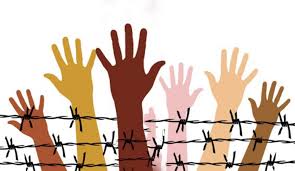
This extension of the hostile environment is exemplified by, but not limited to ‘astronomically high and prohibitive immigration application fees, NHS surcharges, denial of access to public funds for women fleeing domestic violence, the continued policy of indefinite detention, the Byzantine complexity of the rules, the enforced separation of some families, the infamous “Go Home” vans and more. Acting together, these hostile environment policies are designed as deterrents to constitute a form of state ‘harm’ to migrants.
The hostile environment is now referred to as the complaint environment since 2017 and continues to define the UK immigration policy context and its wide-ranging impact on migrants.
The impact of the hostile environment is both direct and far-reaching, including but not the least limited to; denial of legal aid on immigration, no access to justice, and astronomical application fees. Migrants face the challenge of having no recourse to public funds, and limited access to welfare, healthcare and employment. This poses a struggle when indefinite leave to remain per person costs £2389 and NHS health surcharge for migrants is £624 per adult.
AVAILABLE INTERVENTION: MIGRANT ACTION
As a migrant rights and justice-based organization, Migrant Action offers migrants support pathways to access justice (legal advice & broader support with home office applications), advocacy support to access mainstream provision, providing hardship & destitution support and work with solicitors to help vulnerable migrants apply for a change of No recourse status and more.
Beyond these direct interventions, our work also focuses on structural change. Through research, advocacy and grassroots campaigning. We articulate and seek to change policy and local systems that impact migrants adversely.
In 2012, Theresa May stated her aim “was to create here in Britain a hostile environment for illegal migration”. The goal was effectively to make life as difficult as possible for any illegal migrant in the UK to continue living in the country.
Section 115 of the Immigration and Asylum Act 1999 states that a person will have ‘no recourse to public funds’ if they are ‘subject to immigration control’. This means they have no entitlement to the majority of welfare benefits, including universal credit, child tax credit, housing benefit and a range of other allowances and tax credits. People with no recourse to public funds can access primary NHS healthcare regardless of their immigration status however most types of secondary and community NHS healthcare are chargeable.
There are many different ways in which people who have come to the UK find themselves with ‘no recourse to public funds’. Asylum seekers whose claim has failed, refugees who have been given refugee status or other leave but do not yet have the documentation necessary to claim benefits or apply for housing (newly recognized refugees may wait for their papers for months), people trafficked into the UK for work or other reasons who have not (yet) been able to secure recognition of their status as a victim of trafficking, people who have lost their documentation and so cannot prove their right to access benefits.
Others include European migrants who cannot claim benefits because of problems with their ‘right to reside’, parents of British children who have a specific right to reside under European rules which gives them the right to stay and bring up their children in the UK but does not make them eligible for housing or benefits. ‘Undocumented’ migrants: people who have no leave, who may have overstayed or entered illegally for a variety of reasons.
The policies introduced by the UK Home Office create a hostile environment because they are designed to restrict access to public services, housing and financial services for people living in the UK without leave to remain.
In 2015 laws were passed stating that anyone living in the UK as an undocumented migrant had to pay to access non-emergency healthcare. Charges are calculated at 150% of the cost to the NHS, for most conditions payment is expected upfront, and unpaid bills result in personal data being shared with the Home Office.
People with no recourse to public funds are at high risk of homelessness and destitution because, they cannot access mainstream housing, welfare benefits and employment. Following the devastating fire at Grenfell in 2017, many survivors reported to Doctors of The World, a charity that runs clinics and offers advocacy to migrants, that they were too scared to seek medical care due to their immigration.
The NHS have aimed to support people with no recourse to public funds during the COVID-19 pandemic by marking testing, treatment and vaccinations against COVID-19 exempt from NHS charging, free to everyone regardless of their immigration status: However a person must be registered with a GP to receive an invitation to be vaccinated, studies by Doctors of the World, have found that an alarming number of GPs refuse to register people, despite the law stating that everybody in the UK has the right to be treated by a GP regardless of their immigration status or whether they have proof of address documents.
The Joint Council for the Welfare of Immigrants have also provided reports of people who have died at home of suspected COVID-19, too afraid to seek medical help due to fear of deportation, they have argued these deaths are a direct result of the hostile environment.
Migrant Action is actively engaged in the campaign with other organizations challenging the government to scrap the policy as it is creating undue hardship and negates the human rights of migrants. Migrant Action has been successful in its legal advocacy work by working in partnership with legal partners to reverse the no recourse condition attached to leave to remain for some migrants.
The hostile environment is ostensibly directed against ‘illegal’ migrants as a distinct and blame worthy group, seeking to make life in the UK unsustainable through data sharing, criminalization and restriction of access to necessities to sustain life. In reality, these measures have an impact on people who are not irregular migrants, and/or whose irregular status is created and sustained by the immigration system through factors like inability to renew a visa or denial of permission to work while awaiting the determination of an asylum or trafficking claim. The measures the hostile environment directs against migrants at work, concentrate migrants into precarious, low-paid and unregulated sectors of the labour market and make it more difficult to access justice, enforce rights at work, or exit exploitative situations.
For migrant women, this exacerbates an otherwise precarious situation in the labour market, including a concentration into feminised and hidden sectors such as care and domestic work, and constrained dependency created by restrictive visa schemes, while hostile environment measures and the need to retain status deter the reporting of gendered crimes such as domestic abuse. Even for women with permission to work, the denial of welfare benefits and resulting lack of access to affordable childcare severely constrains employment options. As well as fueling labour abuses and exploitation. These factors increase migrant women’s vulnerability to gendered harms including workplace sexual harassment.
The article has argued that these impacts contravene human rights obligations, which largely remain applicable to migrants even where they have irregular status. As well as clearly universalistic standards in the United Nations (UN) monitoring bodies and the Istanbul Convention decisions of the ECSR. And the ECtHR have recognized the need to protect irregular migrants against violations of fundamental rights. Denying access to the labour market for those entitled to remain interferes with the right to work and the right to a private and family life, and the proportionality of justifications is highly questionable since, neither the hostile environment, nor the ban on asylum seekers working have been shown to meet their stated aims.
By pushing work underground and reducing access to labour inspections or remedies for violations, the hostile environment interferes with the right to decent work, which requires fair and equal remuneration, safe conditions and effective enforcement of labour rights. In the interests of decent work and the prevention of forced labour. Inspection should be clearly separated from immigration enforcement as well as being better resourced and applicable to all sectors.
Measures that facilitate gendered harm such as sexual harassment and undermine prospects of existing domestic abuse, are contrary to human rights obligations prohibiting inhuman and degrading treatment and protecting the right to a private and family life. They also violate duties in the Istanbul Convention and International Labour Organization, ILO C-190, on the need for effective and universal protection against violence in the public and private sphere. The UK’s recent ratification of these conventions is a valuable signifier of the importance placed on safeguarding women from violence and harassment. Yet while the hostile environment remains in effect, with protection attainable only for those with a sufficiently secure position and migration status, their universalistic promise is unlikely to be realized.
These harsh and hostile policies from Western and stable countries call for a new world order which behoves African and other developing countries to get their acts together and enhance the human security and dignity of their citizens. And to drastically reduce the JAPA syndrome as it presently exists in Nigeria if not eliminated

About Post Author