
The apron of the domestic wing of Nnamdi Azikiwe International Airport, Abuja
By Dr. Soji Amusan
The incident that occurred last week in Abuja is better considered from a professional angle. As we know, airline operations are global and, to a large extent, highly regulated. It is subject to international norms, rules and regulations.
Nations that are signatories to various agreements and conventions and operate in the air transport ecosystem cannot claim ignorance or invoke their independence as sovereign states to disobey the rules without serious negative consequences, such as isolation, among other sanctions.
I consider this aspect most necessary in response to the various comments and media statements that have gone viral on the issue. The incident has attracted sanctions from the government, the aviation regulator, and other forms of comments by the airport managers, stakeholders, industry experts and the general public.
Typically, social media is already awash with videos of jokes on the issue. Of course, we know that there’s no limit to the extent our comedians can go in turning serious issues, either good or bad to jokes for entertainment and commercial purposes at social gatherings.
In the media statement by the Director of Public Affairs and Consumer Protection of the Nigerian Civil Aviation Authority (NCAA), Mr Michael Achimugu, he posed a question, “Would he (Alhaji Wasiu Ayinde) have behaved this way at Heathrow airport, or any other international airport hub?” The question gave the impression that such an incident is peculiar to Nigeria or Nigerians.
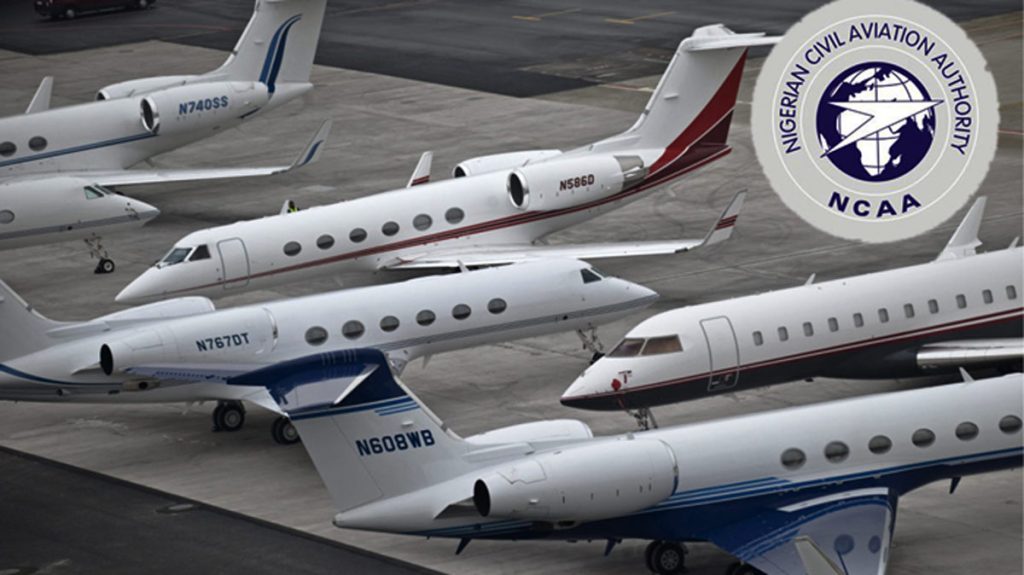
The fact is that various data published by the International Air Transport Association (IATA) and the International Civil Aviation Organisation (ICAO) appear not to support Achimugu’s assertion.
The latest IATA figures indicate an increase in the rate of reported unruly passenger incidents. Based on 53,538 incidents reported from over 60 operators globally, there was an incident for every 395 flights in 2024 (IATA Unruly Passengers Fact Sheet, June 2025).
The trends identified in IATA’s data are consistent with data from regional and national aviation regulators, such as the United States Federal Aviation Administration (FAA), the European Aviation Safety Agency (EASA), the United Kingdom Civil Aviation Agency (UK CAA) and others.
A commentator also insinuated that cases of Unruly Passengers are limited to the cabin, i.e. inside the aircraft, giving the impression that this particular incident, KWAM1 vs ValueJet Airlines impasse, may not belong in the treatment of unruly passengers in the aviation industry.
Efficient Passenger Facilitation Objectives
Key aspects of passenger facilitation include:
* Enhance efficiency and reduce waiting times.
• Efficient Processes:
Streamlining passenger journeys by optimizing processes for tasks like check-in, security screening, baggage handling, and immigration.
• Security Integration:
Ensuring that facilitation measures incorporate necessary security checks to prevent dangerous items or individuals from accessing aircraft, while also aiming to complete these checks quickly.
• Coordination and Collaboration:
Requiring a high level of interaction and coordination between various stakeholders, including airport operators, airlines, ground handling companies, and government agencies, to create a seamless end-to-end experience for the traveler.
• Technology and Infrastructure:
Utilising technologies such as self-service kiosks and advanced passenger processing systems to achieve hasles free boardin and enhances passengers’ airport experience
It’s a fact that emphasis is laid on cases in the aircraft, especially in flight by ICAO. This is because the consequences of the actions of unruly passengers in flight portend more security risks. They could lead to an emergency landing, route diversion and even a crash. Whereas on the ground, at check-in through to the departure gates, there should also be various security agencies available to the airlines to help in the management of unruly passengers. They can be easily controlled without risk of fatality. And without causing avoidable delay for other passengers.
I
In my estimation, the ugly incident of last week Tuesday, 5th August 2025, at the domestic wing of Nnamdi Azikiwe International Airport, NAIA, Abuja, was not professionally handled by the concerned agencies in the airport. The pilot of the aircraft may also be found negligent.
For example, the passenger could have been denied boarding at the check-in counter unless he dropped the bottle in contention. If he resisted, security agents should have been invited to handle him. Furthermore, the fact that he could go through the various checkpoints on the way to the tarmac is evidence of a security lapse. A gap in the airport security architecture that must be seriously looked into and appropriately closed.
As for the pilot, the farthest she could have gone was her appeal to the passenger, explaining why he couldn’t board with the item. Thereafter, she could have returned to the cockpit, aborted the takeoff, reported the case to Air Traffic Control (ATC), and waited until the problem on the ground was solved and ATC authorised an eventual takeoff.
People might wonder the cost of such a delay on ValueJet Airlines. The airline has the law behind it, under its Condition of Carriage. Also available to fall back on and invoke its letters, and its spirit, is the national law, and the industry regulations, which allow airlines to sue recalcitrant passengers and claim compensation for all losses, including claims from aggrieved passengers. Fortunately, KWAM1 has repeatedly, both in public and private, announced that he is extremely loaded.
The regulator, instead of issuing a media statement under pressure, should have invoked its authority in dealing with the security lapses. I want to believe that the Director General Civil Aviation, DGCA, of the Nigerian Civil Aviation Authority, NCAA, Capt Chris Ona Najomo, has unfettered authority to promptly deal with such breaches under the national law and ICAO regulations.
One hopes that a professional issue like this, which is not uncommon in the aviation industry, would not be turned to a political gimmick. Social media is already feeding the public with information that Alhaji Wasiu is connected with the presidency and highly placed elites in the nation.
His history, mien and credibility are already in circulation. All these may be necessary in court when litigation begins, but not of much interest to us in the aviation industry.
All we know is that ICAO, IATA and other such organisations, and international operators in the global aviation space are watching with keen interest.
However, it is not uncommon that incidents happen; how they are handled and the remedial measures put in place are what count.
Soji Amusan, PhD, DBA (Honoris Causa)
CEO RiteKonsult Ltd, a former Sales Manager (West Africa), Lufthansa German Airlines, a former National President, National Association of Nigerian Travel Agents Association (NANTA), a former Assistant Director, United Federation of Travel Agents’ Associations (UFTAA), a former Coordinator, IATA/UFTAA Exams for Nigeria and Cameroon, a member Institute of Travel & Tourism Association (Inst.T.T) of England and a Member of the Board of Trustees, Aviation Round Table (ART) sends this from United Kingdom.
About Post Author