
Braille production in progress
DATELINE: LAGOS, NIGERIA
As the world commemorated World Braille Day on Thursday, 4th January 2024, many have begun the consideration of resources available to people around the world, especially to those who are blind, or those with low vision. Statistics by the World Health Organization, WHO, put the population of this group at about 2.2 billion people globally.
According to a media statement from Lagos, Nigeria, issued by the Jehovah’s Witnesses, it enunciated that “Jehovah’s Witnesses have proved beyond doubt that the welfare of the visually impaired matters”. This is evidenced by the organization’s published braille literature which presently is in more than 50 languages and still counting.
The arduous task of producing Bible-based publications for people who are blind or have limited vision the statement revealed, started more than 100 years ago, and there are series of shreds of evidence of a great impact on the spiritual needs of the visually impaired.
A few of the organizational accomplishments on the production of braille literature include the publishing in 2022, of the holy Bible named, “The New World Translation of the Holy Scriptures”. The Braille Bible was released in three languages: German, Korean, and Ukrainian.
Also on the African continent, Jehovah’s Witnesses have produced Braille publications for people in Chichewa, a language spoken in Malawi.
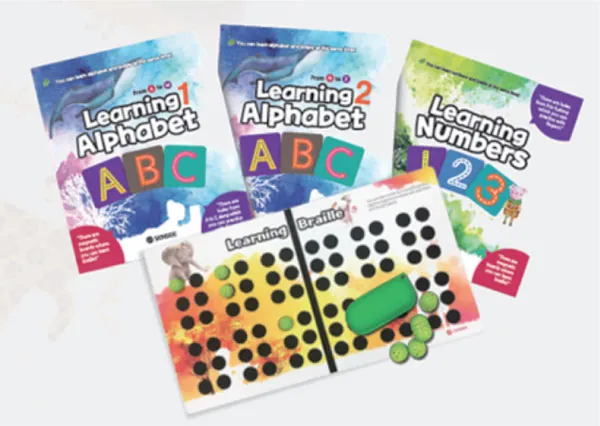
BRAILLE BOOK PRODUCTION PARAPHERNALIA
The media statement revealed that production of “All Bibles in Braille are printed at Wallkill, New York, U.S.A., using a Braille embosser.
It explained further that the “Braille embosser machine embosses Braille dots onto special paper, which is then collated and bound into volumes that are shipped to the branch offices for distribution to publishers”.
Given a glimpse of the efforts required to get a braille book published, the statement highlighted thus; “A complete edition of the New World Translation (the whole Bible) in Braille may comprise over 30 volumes and occupy some two meters (6.6 ft.) of shelf space”.

“In addition to the transcribed text, the Bibles and publications include visual aids, such as maps and diagrams, converted into a format that blind people can comprehend”, the statement said.
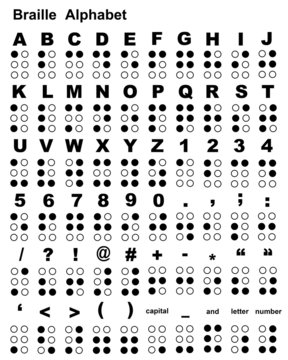
According to the insightful media statement, Jehovah’s Witnesses also produce a workbook titled, “Learn to Read Braille.” It further explained, “The workbook is designed for a sighted person and a blind person to use together. It comes with a kit containing a slate and stylus so that the Braille learners can use the tools to emboss Braille characters. This process can help the Braille learner more easily memorize characters”.
The statement pointed out that, “Literature for people who are blind or have low vision is available in several languages in these formats:
• Audio files from the JW Library app and jw.org website.
• Large print.
• Braille.
• Electronic files for note takers (portable electronic devices with a speech synthesizer and a refreshable Braille display).
• Electronic files for screen readers (computer programs that read audibly whatever is on the monitor)”.
It further revealed heartwarming information to people in Africa’s most populous black nation, Nigeria, thus, “Most recently, Jehovah’s Witnesses have embarked on the production of braille starter kits in Igbo, Efik, Yoruba, and Pidgin languages”.
The media statement succinctly put those measures as “part of efforts to assess and meet the needs of these blind and visually impaired ones to read braille in those four indigenous languages. Some are already familiar with Grade 1; & 2 English Braille, and our research shows that some will do well with braille publications produced in these languages”.

For more information, please visit jw.org or any Kingdom Hall of Jehovah’s Witnesses near you to access the Braille resources available.
Albeit, the cost implication of all these efforts at producing Braille books for a group less than 25% of the global population, and the self-evident truth that all these materials are distributed without charge, not even an attempt at cost of production recovery, beat the imagination of any sane mind, taken cognizance of the global socio-economic condition. This position of JW is most likely an indication that there must be more to it than pecuniary benefit.
What is that benefit? One of the titles of a popular author, James Hadley Chase, declared thus, “Something Better Than Money”.
Without an iota of doubt, mankind must find out that, which is better than money!!!
About Post Author